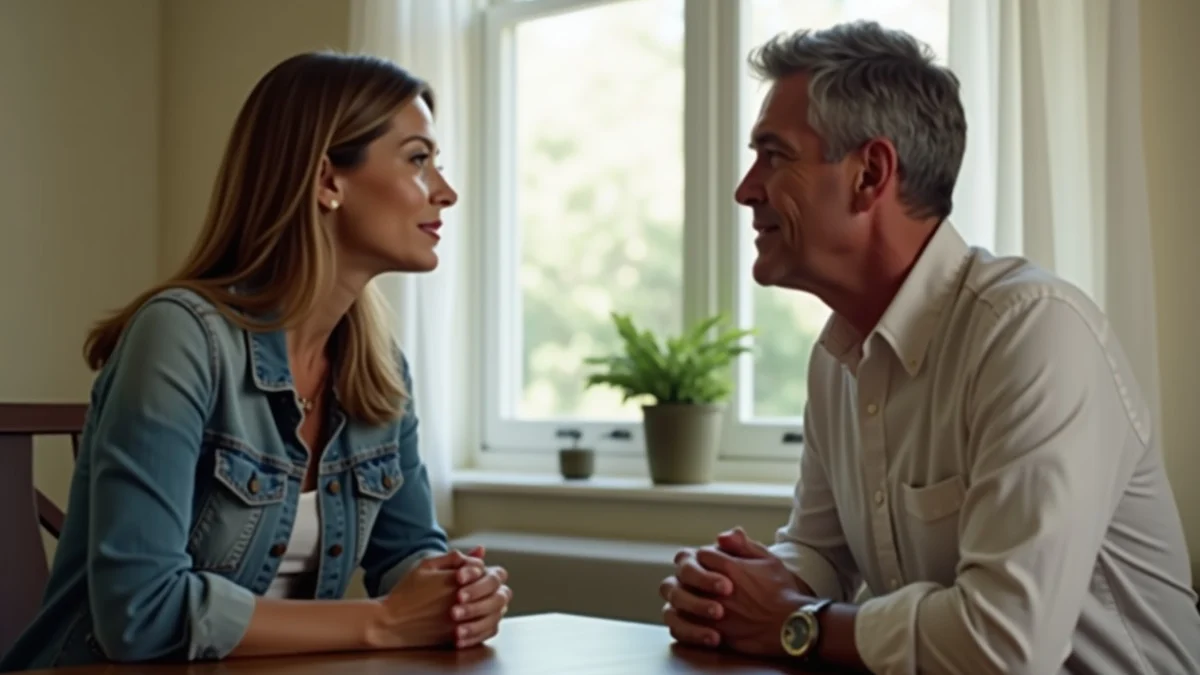
Dating after divorce in California over 40 can work best when you assess your available time, emotional capacity, and established responsibilities before pursuing matches. There is no required timeline for starting again. A measured approach lets you protect children, caregiving routines, work demands, and friendships while learning what relationship expectations fit your life now. In a state where distance between neighborhoods, suburbs, and cities can shape dating plans, early clarity about pace and practical compatibility matters.
Assess Whether You Have Room for Dating Right Now

Dating after divorce in California over 40 starts with an honest capacity check, not an age-based timetable. Ask yourself: Am I interested in meeting someone, or mainly responding to loneliness, pressure, or a wish to prove that I am still desirable? Can I be curious about a new person without comparing every detail with my former relationship? A clear answer does not need to be enthusiastic, but it should feel like your own decision.
Consider emotional availability in practical terms. Can you tolerate an imperfect first conversation without treating it as evidence that dating will fail? Are you able to accept that a match may have a different history, routine, or communication style? Notice your reaction when your former partner comes to mind. Occasional memories are ordinary; persistent anger, fear, or preoccupation may signal that more personal space is needed before adding dating to your life.
Check your calendar and energy honestly. Is there dependable room for a new social commitment without neglecting work, rest, friendships, or essential responsibilities? In California, distance between communities can turn a short meeting into a larger time and travel decision, so include transportation and recovery time in your assessment. You may be ready to browse without meeting yet, or ready for one conversation but not regular dates. Both are valid starting points.
Choose a Pace That Matches Your Emotional Capacity
Set limits for app use before dating activity begins to fill every spare moment. You might check messages during two planned windows, silence notifications overnight, and keep only a manageable number of active conversations. That boundary leaves room to notice how you feel instead of treating every new match as an urgent task. When conversations become draining, pause new matches rather than forcing yourself to stay responsive.
Move from messaging to meeting at a speed you can sustain. Decide how many conversations you can handle, how often you can meet, and how much travel fits your week. In California, a match in another part of a large metro area or several counties away may involve significant time on the road. Discuss location and scheduling early so enthusiasm does not create a commitment your calendar cannot support.
Exclusivity deserves a separate conversation rather than an assumption. Before agreeing, clarify whether it means stopping app activity, dating only each other, or simply focusing on the relationship while you learn more. Notice your capacity after several dates, not just during an exciting beginning. A planned break can be as simple as pausing notifications and telling a match, “I need some time away from dating and will reconnect when I have more space.”
Protect Children, Caregiving Duties, and Household Stability
For California singles over 40 dating after divorce, a stable household comes before accommodating a new match’s preferred schedule. Reserve dating time that does not displace school routines, medical appointments, caregiving shifts, or the quiet time you need to run your home. A person who respects a clear availability window is showing more than flexibility; they are showing respect for your existing responsibilities.
Keep early dating separate from children and other dependents. Do not share their names, school, regular activities, address, or daily schedule in an app conversation. Arrange first meetings away from home, and wait to consider an introduction until the connection has demonstrated consistency and you have a clear reason to bring your worlds together. There is no need to promise a date that they will meet your children soon.
Last-minute changes are sometimes part of parenting and caregiving. State that plainly without giving a detailed account: “A family responsibility came up, so I need to reschedule. I can confirm another time after Thursday.” Then notice the response. Patience is encouraging; guilt, pressure for private details, or repeated demands to override a family commitment are useful boundary information.
California distance can add another layer, especially when a match lives across a county line or a long drive from your usual routine. Choose meeting locations and times that let you return home reliably. Protecting that predictability keeps dating from becoming a source of disruption for the people who depend on you.
Talk About Your Divorce Without Making It the Whole Conversation
A brief, calm explanation gives a new match useful context without turning early dating into a postmortem. In California’s varied dating circles, you may meet people with different expectations about privacy, commitment, and how soon to discuss the past.
Share what affects the present: whether the relationship has ended, what you learned, and what you are open to now. Keep legal details, private history, and emotionally charged disputes for a later conversation built on trust. If someone keeps pressing, treat your boundary as information about the fit.
| Stage | Share Now | Save For Later | Boundary Phrase |
|---|---|---|---|
| Early app conversation | State that you are divorced, give a short neutral description of the timing or life stage, and shift toward current interests. | Detailed relationship history, blame, court matters, and private information about your former spouse. | “I’m comfortable saying the marriage is over. I’d rather tell you more once we know each other better.” |
| Before meeting | Clarify what you are seeking now and mention any broad lesson that shapes your expectations. | A complete account of why the marriage ended or a comparison between the match and your former spouse. | “That experience clarified what I value, but I’m interested in getting to know you as yourself.” |
| Repeated probing | Repeat the limit once and notice whether the match respects it. | Anything you would be sharing mainly to defend yourself or satisfy pressure. | “I’ve answered that as much as I’m ready to. Let’s change subjects.” |
Evaluate Whether Two Established Lives Can Work Together

For California singles over 40 dating after divorce, compatibility often depends less on instant chemistry than on whether two settled lives have workable overlap. Discuss geography early: a connection between Sacramento and the Bay Area, or between inland and coastal parts of Southern California, may involve more driving than either person wants to absorb regularly. Ask what each person considers a realistic travel radius and whether either home base is likely to change.
Finances matter as a lifestyle question, not as an early request for personal details. Notice differences in spending habits, housing priorities, travel expectations, and comfort with paid activities. A person who prefers quiet weekends close to home may be a poor practical fit for someone whose routine centers on frequent trips and expensive outings; neither preference is wrong.
Family commitments and routines deserve the same practical attention. Compare recurring work demands, adult children who rely on support, care for relatives, religious practices, pets, and protected time with friends. Compatibility shows up when both people can respect these commitments without treating them as obstacles to overcome.
Compromise should be visible in small choices before it is assumed in large ones. See whether each person can alternate neighborhoods, adjust plans around a fixed obligation, or try the other’s preferred kind of weekend. Persistent one-sided accommodation is useful information: affection alone may not bridge a lifestyle mismatch.
Rebuild Dating Confidence Through Small, Measurable Actions
After a long marriage, confidence returns more reliably through completed actions than through waiting to feel completely certain. Start with one contained task: finish a profile in a single sitting, then leave it alone for a day before checking that it sounds like your current life rather than a résumé or a record of the marriage. Choose photos and details that give a match something specific to respond to, such as a weekend routine, a favorite kind of outing, or an interest you genuinely maintain.
Keep the first round small. Reply to no more than two or three conversations at once, and move forward only with people whose messages feel respectful and reciprocal. A brief video call or a short daytime coffee in a convenient California location can be enough to practice meeting without treating every date as a major test. Consider success to be showing up, asking a few real questions, and noticing how you feel afterward—not securing another date.
After each interaction, write down three observations: what felt natural, what drained you, and what you would handle differently next time. Perhaps long message threads leave you disengaged, or perhaps you need a clearer limit on late-night chats. Adjust one boundary at a time, then try again. This approach builds evidence that you can make thoughtful choices, decline unsuitable connections, and stay open to a relationship that fits the life you have now.
Questions about dating after divorce in California over 40
Do I need to describe myself as divorced on a dating app?
You can share that you have been married before when it feels relevant, but you do not need to make it a headline. Early profile space is usually better spent on your current life, interests, availability, and the kind of connection you are open to. Direct questions deserve a truthful, brief answer; details can wait until mutual interest develops.
How should I handle a match who wants to move faster than I do?
State the pace plainly: “I’m enjoying getting to know you, and I prefer to take this one date at a time.” Someone who is compatible with your current capacity will respect a clear limit without bargaining, guilt, or repeated pressure. Continued pressure is useful information about fit.
Is dating someone in another part of California realistic after divorce?
It can be, provided both people can name a workable plan for travel, timing, and eventual compromise. California distance can turn a seemingly nearby match into a multi-hour commitment because of traffic, transit connections, or regional geography. Discuss who can travel, how often, and whether either person could realistically change routines before treating the connection as established.
How can I decline a date without feeling guilty?
A brief, respectful message is enough: “Thank you for the conversation, but I don’t feel the match is right for me. I wish you well.” You do not owe a detailed critique, another meeting to confirm your decision, or ongoing contact. Protecting your time and household stability is part of dating responsibly after divorce.
Before arranging another date, choose one boundary to test this week: limit app time, keep a first meeting brief, or state a scheduling constraint clearly. Notice whether the interaction leaves room for your existing life rather than asking you to repeatedly disrupt it.