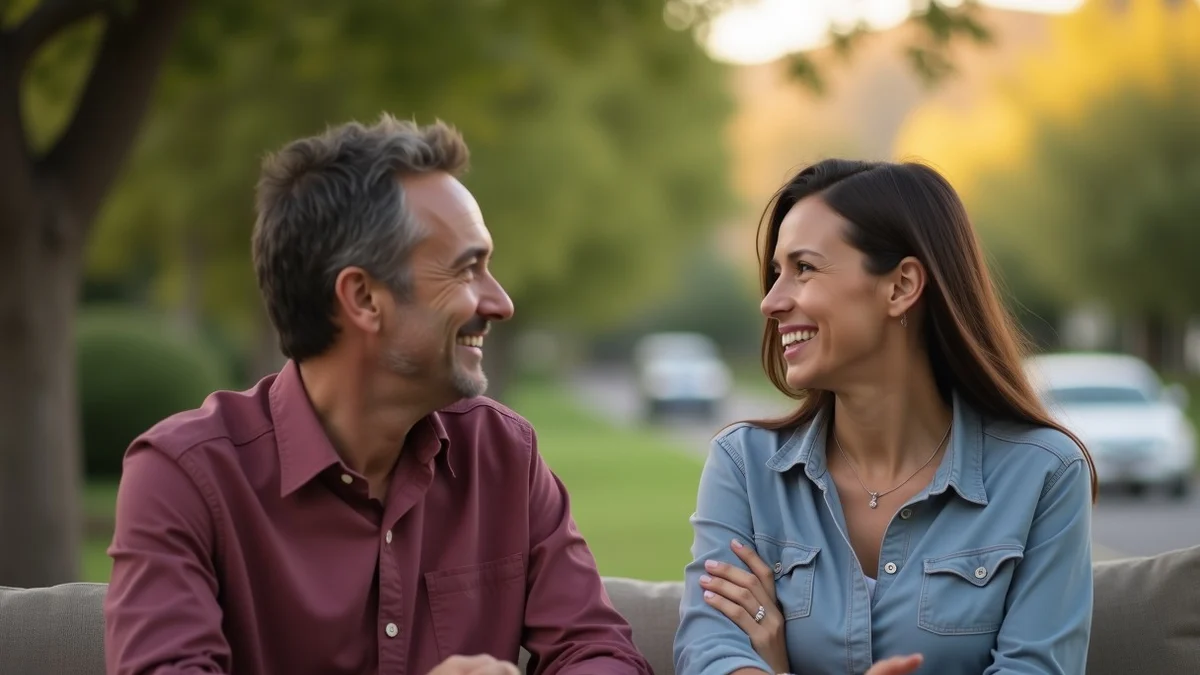
Dating after divorce in California for a serious relationship works best when you state your intentions calmly, screen for consistent readiness, and let exclusivity follow evidence rather than early chemistry. You do not need to promise remarriage or explain every detail of your marriage to be clear about seeking a committed partner. California’s size also matters: a connection that feels strong online still needs enough practical time for regular dates when homes, work, or family responsibilities are far apart.
Clarify What a Serious Relationship Means After Divorce

Dating after divorce in California for a serious relationship starts with defining commitment on your own terms before you invest in new connections. “Serious” can mean a steady, emotionally close partnership and eventual exclusivity; it does not automatically mean living together, marrying again, or combining households on a fixed schedule. Decide which parts are essential now and which remain open questions.
Write down the relationship shape you could realistically welcome: regular time together, mutual care, a partner who is part of your social life, and a shared plan that develops over time. California’s distance and varied work patterns can matter here. Someone based across a large metro area may be a strong match only if both of you view travel and consistent time together as workable parts of a relationship.
Separate your present intention from a promise about the distant future. You might be open to remarriage, unsure about it, or certain that a committed partnership without marriage suits you better. Each position can be compatible with serious dating when it is stated honestly. What matters is that you seek an enduring bond rather than indefinite ambiguity.
Also consider how a future relationship would fit the life you have rebuilt: established friendships, children or adult family, routines, home, and personal independence. This reflection gives you a clear standard for choosing dates, without treating a new partner as a replacement for the marriage that ended.
State Your Commitment Goal Clearly in Your Profile
On a California dating profile, state your relationship intention in plain language rather than relying on labels such as “serious” alone. A divorced single might write, “I’m interested in building a committed relationship with someone who values consistency, affection, and a shared life.” This signals direction without claiming certainty about a person you have not met.
Clear wording can acknowledge a thoughtful pace: “I’m dating with long-term partnership in mind and prefer to let trust develop naturally.” Someone open to marriage could say, “Marriage may be part of my future, but I’m looking for the right partnership rather than rushing toward a milestone.” These statements communicate openness without making a promise before compatibility is known.
Keep the profile welcoming to people with different histories. Avoid lines that attack casual daters, blame an ex, or demand instant commitment. A brief statement about what you are available for is more useful: “I’m ready to meet someone for a steady, mutually supportive relationship and see where a strong connection leads.”
Look for Readiness Rather Than Persuasive Claims

| Signal | Supports Readiness | Raises A Question |
|---|---|---|
| Consistency between words and choices | They describe wanting a committed relationship and follow through on reasonable plans, reply in a steady manner, and address changes directly. | Grand statements about finding “the one” carry little weight when dates repeatedly dissolve into last-minute cancellations or vague rescheduling. |
| Emotional availability | They can speak calmly about what they learned from divorce without turning every conversation into a case against an ex. | Persistent bitterness, unresolved drama, or an insistence that every former partner was at fault may show that the past still dominates their dating life. |
| Realistic room for a relationship | A person can name practical time for dating around work, family, and the distance between California communities, then protect that time. | A packed life is not disqualifying, but indefinite uncertainty about when you can see each other is a poor foundation for building a partnership. |
| Reciprocal curiosity | They ask considered questions, remember important details, and engage with your values rather than steering every exchange back to themselves. | Interest that appears only when they need attention, reassurance, or convenience is different from interest in sharing a future. |
Let Trust Develop at a Pace Supported by Evidence
Trust after divorce does not need to arrive through intense conversation or constant contact. Let it build through repeated, ordinary experiences: messages that match the person’s stated availability, plans that are kept, and clear explanations when plans change. In California, where a promising match may live across a long commute, reliability around scheduling can reveal more than frequent texting.
Share personal information in stages. Early conversations can cover interests, routines, and what you enjoy doing with a partner. More sensitive details can wait until the connection has shown steadiness and respect. You do not need to disclose your full history to prove openness.
Notice how the other person handles a boundary or small disappointment. Someone who accepts “I’m not ready to discuss that yet” and reschedules without pressure is showing useful evidence. Keep your own pace as well: move from messaging to calls, then meetings, while allowing trust to catch up with attraction.
Set Boundaries Around Discussing a Past Marriage

Early on, be straightforward that you are divorced and offer a brief, respectful account of what the experience taught you about partnership. Relevant information includes anything that materially shapes your availability or the kind of relationship you can pursue. Keep the focus on your present choices rather than assigning a complete history of fault to an ex-spouse.
The first few dates do not require private correspondence, detailed arguments, financial records, or a chronological account of the separation. Those details can wait until the relationship has enough substance to handle them with care. Honest disclosure matters when a fact directly affects a potential partner, but a new date does not need to become the audience for every painful chapter of a marriage.
Pay attention when discussion repeatedly returns to an ex. A brief mention or an occasional difficult memory is different from constant comparisons, anger, or a need for validation. You might say, “I understand your marriage was important, but I’d like to get to know who you are now. Can we leave comparisons out of our dates?” If that boundary is dismissed or the past dominates each conversation, step back rather than trying to resolve it for them.
Test Compatibility for the Future You Both Describe
A serious relationship needs more than shared attraction and similar intentions. As conversations deepen, compare the practical shape of the future each of you imagines. In California, location can be a meaningful compatibility question: ask how each person feels about staying in a current city, handling a long drive between regions, or eventually changing neighborhoods for a partnership. A connection can be strong while two fixed location plans remain incompatible.
Use open, specific prompts rather than turning a date into an interview: “What does a satisfying week usually look like for you?” “How involved do you expect to be with adult children, younger children, or extended family?” “What does financial security mean to you?” These questions reveal preferences about time, family roles, spending, work, and home life without requiring either person to disclose private financial details.
Discuss how you each handle disagreement and what long-term priorities carry the most weight. One person may need frequent social activity and spontaneous weekends; another may value quiet routines, outdoor time, or a more settled home base. Listen for whether differences can be accommodated, not simply explained away. Compatibility is clearer when both people can describe a future that has room for the other person's real responsibilities and values.
Decide Whether Exclusivity Is the Right Next Step
- Name the decision plainly. After several dates, say: “I’m interested in focusing on this relationship. Are you ready to date exclusively?” Wanting a committed relationship after divorce does not require assuming you are already exclusive.
- Compare words with follow-through. Before closing other connections, look for dependable contact, plans that happen, and a respectful response when one of you needs to reschedule. Interest that appears only when convenient is not a sound basis for exclusivity.
- Confirm that material deal-breakers have been addressed. For California singles, this can include whether the distance between your areas is workable, how often you can realistically meet, and whether each person has room in their life for a relationship.
- Check that the pace feels mutual. Exclusivity should not be a concession made to prevent someone from leaving or a shortcut past unanswered concerns. Either person can ask for more time without being punished or persuaded.
- Make the agreement specific. Decide together whether you will pause or delete dating-app conversations, stop accepting new dates, and tell one another if either person changes their mind. Direct consent turns an assumption into a shared commitment.
- Treat exclusivity as the next stage of learning, not proof of a permanent outcome. Keep noticing whether care, candor, and effort remain mutual once attention is no longer divided.
Questions about dating after divorce in California for serious relationships
Can a relationship be serious without a plan to remarry?
Yes. A committed relationship can center on exclusivity, emotional partnership, shared routines, and long-term care without an immediate plan for marriage. State that distinction plainly when it becomes relevant, rather than assuming that “serious” carries the same meaning for both people.
Should I date someone who is separated but not yet divorced?
Treat legal status and emotional readiness as separate questions. Ask what remains unresolved, how much contact with the former spouse is still required, and whether the person has room for a new relationship. You do not need to accept uncertainty that conflicts with your preference for a fully available partner.
How can I handle overlapping social circles after divorce?
California communities can feel smaller than their geography suggests, especially through work, schools, hobbies, and long-standing friend groups. Mention likely overlap early when it could affect comfort or privacy, avoid asking a new partner to take sides, and introduce social circles gradually once the relationship has stable footing.
What if a promising match lives far away in another part of California?
Discuss the practical distance before attachment outpaces the arrangement. Compare travel tolerance, work schedules, preferred meeting locations, and whether either person could realistically spend time in the other’s area. Interest alone cannot resolve a recurring trip between distant California cities; a workable plan needs mutual effort.
Before moving toward exclusivity, identify the one future-facing question that still needs an honest answer. It may concern location, family roles, spending priorities, conflict habits, or how much time each person can realistically give a relationship. Raise it directly, then compare the answer with the person’s conduct over several dates. Mutual clarity, dependable follow-through, respected boundaries, and a shared agreement to close other dating connections are stronger signals than a rapid declaration of commitment.