
California first dates work best when the format matches the setting and both people can talk without committing to an exhausting itinerary. A café followed by a short walk suits a new match who wants flexibility; a museum, market, class, or outdoor activity gives more structure to a quieter conversation. Choose one main activity, keep travel reasonable, check the forecast and air quality, and prepare an indoor or nearby backup before confirming the plan.
Keep Conversation Easy with Coffee, Markets, and Short Walks

Choose a format that leaves room for conversation without creating a long commitment: meet at a café, talk over coffee, then take a brief stroll nearby. A 45- to 60-minute plan gives both people a natural stopping point while allowing the date to continue if the connection feels comfortable.
Farmers markets, waterfront paths, and public gardens offer gentle conversation prompts. Browse a few stalls, notice the surroundings, or pause on a bench rather than filling every silence with questions. These settings also suit matches who prefer movement to sitting across a table.
Keep the route simple and the meeting point clear. A short café-and-walk plan works well for a first meeting; save a longer outing for a later date, after you know more about each person’s pace and interests.
Use Local Culture for an Interesting Date Without a Large Bill
A museum’s discount period, free-admission window, or community day can give a new couple something specific to discuss without committing to a full evening. Check the museum’s current admission terms, time slots, and closing hours before suggesting it. A smaller exhibition may suit two people who prefer a quieter setting, while a broader collection offers more chances to compare interests.
Gallery walks and public art routes create natural conversation prompts without requiring a formal meal. Look for a cluster of galleries, a public-art program, or an exhibition opening that fits both schedules. Library calendars can also point to readings, talks, film screenings, or workshops that provide structure while leaving room to talk before or afterward.
Street fairs and community performances can work when both people enjoy a livelier atmosphere. Confirm the event date, admission policy, weather arrangements, and accessibility details through the organizer’s current information. For a lower-cost plan, choose one featured activity rather than trying to cover an entire event; the date should leave space to decide whether to continue, not feel like an all-day obligation.
Match an Outdoor Plan to California's Very Different Regions
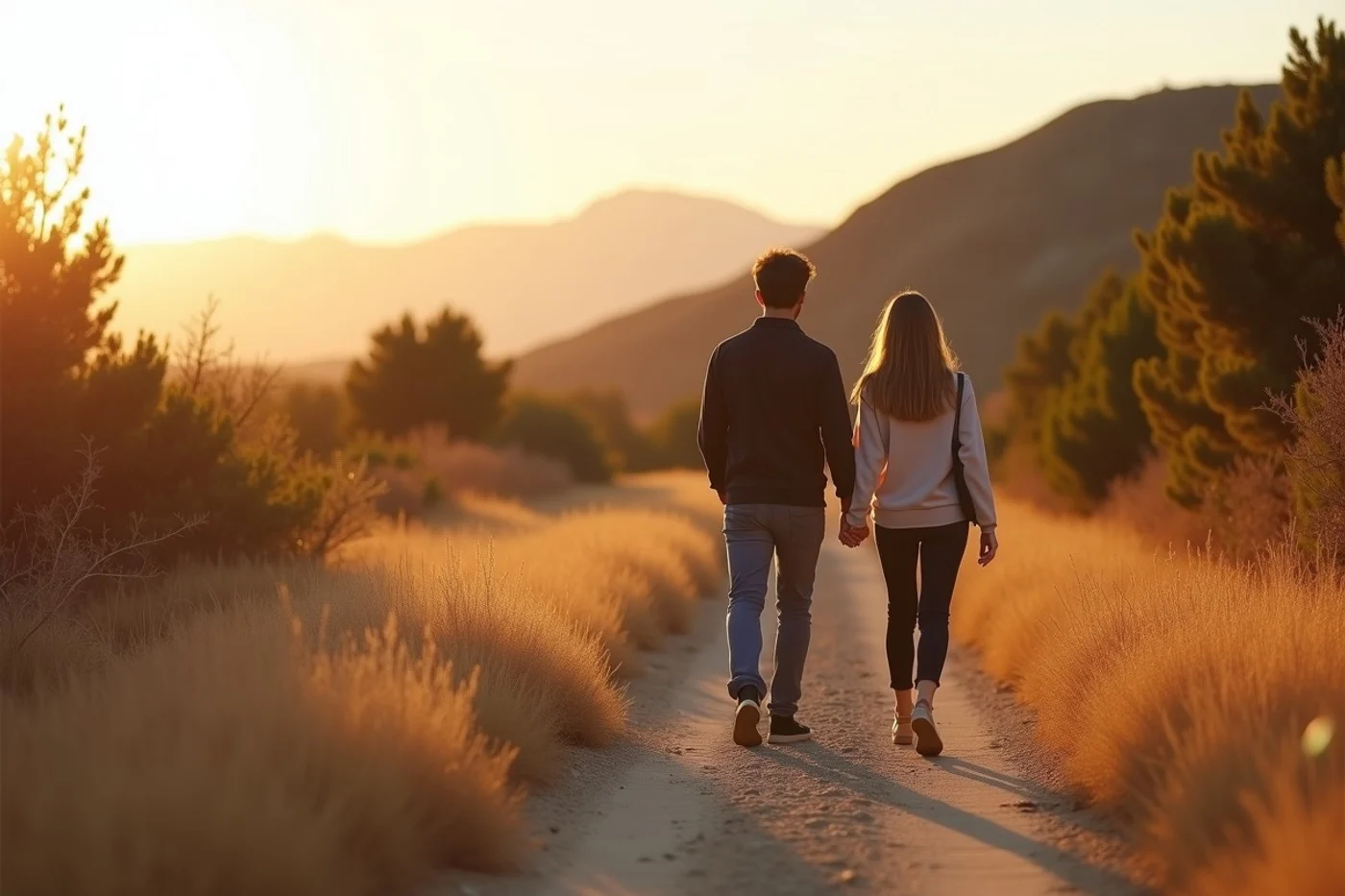
For California first dates outdoors, choose the setting around the conditions rather than the postcard view. Along the coast, a level bluff, harbor, or beach path can suit an afternoon when marine air keeps temperatures down; bring a layer and finish before daylight fades. In a city, a large park, botanical space, or paved lakeside loop offers a more predictable surface and nearby facilities without turning the date into a hike.
Valley and inland plans work best early or near sunset during hotter periods: consider a shaded park, riverfront area, or short nature trail with little elevation. Mountain and desert outings need more restraint on a first meeting—select a clearly marked, short route, account for uneven terrain and fast-changing temperatures, and check seasonal closures, permit rules, and access conditions before proposing it.
Move the Date Indoors When Conditions Are Uncomfortable
A sudden heat spike, rainstorm, or smoky afternoon does not have to cancel a new-couple date. Switch to a bookstore where you can browse separate shelves and compare finds, a museum with room to talk between exhibits, or a conservatory with sheltered paths and seating.
Food halls suit two people with different appetites: each can choose a counter, then meet at a shared table for a defined lunch or early-evening window. A low-key craft session, puzzle café, or casual board-game venue can also break up silences without turning the date into a high-pressure competition.
Before leaving, check the current forecast and air-quality guidance from the relevant official weather and local air-quality authority. During wildfire smoke or poor air conditions, skip indoor-outdoor venues with open walls or patios, and choose a fully enclosed option instead. Confirm hours, admission, and any reservation requirement directly with the venue.
Try an Activity That Is More Interactive Than Dinner

- Mini golf gives a new couple something to discuss between holes without requiring nonstop conversation. The playful format suits people who prefer a relaxed pace.
- Bowling creates clear turns and brief pauses for conversation, though lane noise can make longer exchanges difficult. It works well for an active date with simple structure.
- A beginner class in pottery, cooking, dance, or painting provides guidance when neither person wants to carry the conversation alone. Expect more talking before and after the activity than during it.
- Arcade games keep the energy high and offer easy choices when interests differ. The noise level may limit conversation, so treat it as a playful introduction rather than a deep-talk setting.
- Trivia encourages teamwork and reveals how each person handles disagreement, competition, and uncertainty. Choose a setting where the volume still allows you to talk between questions.
- Skating combines movement with natural breaks for conversation, but balance, footwear, and mobility matter. A less physically demanding alternative may suit a first meeting better.
- A hands-on workshop creates a shared task without the formality of dinner. Crafting or building together can reduce awkward pauses, while the focused work leaves less room for extended personal conversation.
Turn an Idea into a Manageable First-Date Plan
Before suggesting a date, agree on a comfortable budget and a realistic time window. A 60- to 90-minute plan can suit a first meeting, while a longer activity deserves more discussion about energy and expectations. Keep travel practical: compare drive times, transit connections, parking availability, and whether either person would need to cross a large part of the region.
Confirm details that affect participation. Ask about step-free access, walking distance, seating, restrooms, dietary needs, and clothing or footwear. Check whether reservations, timed entry, permits, or advance tickets apply, and verify current hours before making a firm plan.
Choose one clear meeting point rather than relying on vague directions. For example, name the entrance, plaza, or other easy-to-find spot and set a time that allows for ordinary travel delays. Pair the main activity with a nearby backup: an indoor venue if conditions change, a shorter route if energy drops, or a simple café stop if the original plan becomes impractical. Share the plan in one message so both people know the cost, duration, route, and next step.
## Keep Conversation Easy with Coffee, Markets, and Short Walks A café followed by a short stroll is a practical choice when two new matches want time to talk but do not know how long the date will last. Meet at a clearly defined café, allow space for conversation, and decide in advance whether the walk is optional or part of the plan. A 60- to 90-minute first meeting leaves room to continue naturally without making either person commit to an entire afternoon. Farmers markets, public gardens, waterfront paths, and walkable community areas offer similar flexibility. A market supplies small points of discussion, while a garden or waterfront route may suit people who prefer movement over sitting face to face. Keep the route short enough for changing energy, uneven terrain, or uncomfortable weather. Pick a meeting point near transit or parking rather than asking one person to search for the other after arrival. ## Use Local Culture for an Interesting Date Without a Large Bill Cultural activities can give a first date a clear focus without requiring a large meal or a long reservation. Consider a museum during a discount period, a gallery walk, a public-art route, a library event, a street fair, or a community performance. These formats provide shared subjects to discuss, which helps when conversation takes time to warm up. Check the venue’s current admission terms, opening hours, event schedule, and reservation requirements before suggesting it. Some activities are better for browsing than talking, so add a short café stop or outdoor pause only when the route remains manageable. A small gallery visit followed by a walk may suit people who enjoy exchanging opinions; a public lecture or performance works better when the activity itself can carry more of the evening. ## Match an Outdoor Plan to California's Very Different Regions California’s regions call for different outdoor choices. Along the coast, a brief beach walk, harbor-area stroll, or scenic overlook can work well, but wind, fog, and changing temperatures call for an extra layer and a clear end point. In urban areas, choose a park, garden, or public path with straightforward access and enough nearby activity to support a backup plan. Valley locations can suit farmers markets, shaded parks, or short walks earlier or later in the day when temperatures are more comfortable. Mountain dates may involve a scenic walk, snow-season activity, or viewpoint, but check road conditions, daylight, terrain, permits, and seasonal access before traveling. Desert outings require particular attention to heat, shade, water, and timing; an indoor alternative may be the wiser choice during severe conditions. An outdoor date should match both people’s comfort and ability, not just the scenery. Ask about walking distance, stairs, surfaces, and equipment before choosing a route. Keep the travel area modest, especially when the match is new, and avoid turning a simple meeting into a demanding excursion. ## Move the Date Indoors When Conditions Are Uncomfortable Heat, rain, poor air quality, and wildfire smoke can quickly undermine an outdoor plan. Bookstores, food halls, museums, conservatories, craft activities, casual games, and community events offer ways to keep the meeting active while staying out of difficult conditions. A bookstore or museum generally leaves more room for conversation than a loud game venue; a craft activity gives hands something to do but may require a reservation. Check current weather information and air-quality advisories before leaving, particularly when smoke or extreme heat is possible. Do not treat an indoor plan as automatically suitable: verify ventilation, accessibility, noise, seating, and opening status. Share the change early and offer a simple alternative rather than sending a vague last-minute message. ## Try an Activity That Is More Interactive Than Dinner A non-dinner date can reduce pressure and reveal how two people interact. Choose the activity according to the amount of conversation it permits: - Mini golf supports light conversation between turns and works for people who enjoy a little playfulness. - Bowling creates a clear structure, though the noise may limit deeper discussion. - A beginner class or hands-on workshop gives the pair a shared task, but check the pace and skill requirements first. - Arcade games suit an energetic date, while a quieter game area may be better for people who dislike crowds. - Trivia offers teamwork and conversation, although a competitive atmosphere may not suit every new match. - Skating provides movement and novelty, but it requires attention to balance, clothing, and accessibility. - A casual craft activity can work for a creative pair, provided neither person feels pressured to produce something impressive. Pair a louder or more active option with a short quiet stop afterward only when both people are comfortable extending the date. One main activity is usually enough for a first meeting. ## Turn an Idea into a Manageable First-Date Plan Before confirming, settle the practical details rather than relying on a broad suggestion such as “sometime this weekend.” Use this checklist: - **Budget:** Agree on a general spending level and whether each person handles their own costs. Free or low-cost public activities can be just as suitable as paid venues. - **Duration:** Start with one activity and a defined time window. A short meeting can be extended by mutual agreement. - **Travel:** Compare travel times from both starting points. A date that requires one person to cross a large part of the state is rarely a sensible first meeting. - **Arrival:** Confirm the entrance, meeting landmark, parking or transit options, and what happens if one person arrives early. - **Accessibility:** Ask about stairs, walking distance, seating, restrooms, surfaces, and other needs without making assumptions. - **Reservations:** Verify current schedules, admission rules, class availability, and cancellation terms before relying on a timed activity. - **Clothing:** Mention terrain, temperature, indoor cooling, or activity requirements so neither person arrives unprepared. - **Backup:** Select a nearby alternative for weather, air quality, crowds, closure, or a change in energy. A reliable plan can be as simple as “meet at a café for an hour, walk nearby if the weather is comfortable, and switch to the indoor backup if conditions change.” Choose the format that supports conversation, keeps travel proportionate, and gives both people an easy way to end or continue the date.